

Non-Invasive Scoliosis Treatment in College Station: Improving Spinal Alignment and Posture

Scoliosis can affect posture, movement, comfort, and confidence. While some cases are mild and only need monitoring, others may contribute to back pain, uneven shoulders, muscle tightness, stiffness, or difficulty standing comfortably for long periods. For many patients, non-invasive scoliosis treatment offers a conservative way to support spinal alignment, improve posture, and reduce daily strain.
At Campion Chiropractic Clinic in College Station, we help patients better understand their spine and explore chiropractic care options that fit their needs.
What Is Scoliosis?
Scoliosis is an abnormal sideways curve of the spine. It can develop during childhood or the teen years, but adults may also experience scoliosis-related symptoms due to posture changes, degeneration, old injuries, or long-term spinal imbalance.
Not every spinal curve causes pain. However, scoliosis can affect how weight is distributed through the back, hips, shoulders, and neck. Over time, this imbalance may place extra stress on muscles and joints, leading to discomfort or reduced mobility.
Why Posture Matters With Scoliosis
Posture is not just about standing straight. It reflects how the spine, muscles, joints, and nervous system work together. When the spine curves or rotates, the body often compensates. One shoulder may sit higher, one hip may feel tighter, or the head may drift forward.
For patients in College Station, these changes can affect school, work, sports, driving, exercise, and daily routines. Improving posture does not mean forcing the spine into a perfect position. It means helping the body move with better balance and less strain.
What Non-Invasive Scoliosis Treatment Can Include
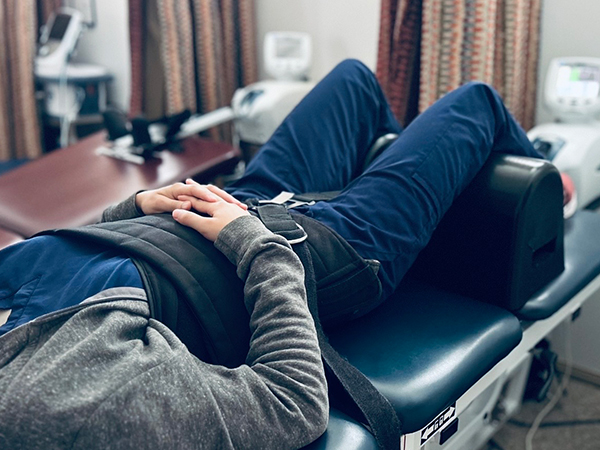
Non-invasive scoliosis treatment focuses on conservative care rather than surgery. The right approach depends on the severity of the curve, symptoms, age, activity level, and overall health.
A chiropractic care plan may include:
- Spinal and posture evaluation
- Chiropractic adjustments when appropriate
- Stretching and mobility recommendations
- Strengthening exercises for spinal support
- Guidance for posture during work, school, or screen use
- Lifestyle recommendations to reduce daily strain
- Monitoring changes in symptoms or function
These strategies are designed to support better movement and comfort while helping patients manage the effects of scoliosis.
When Should You Get Checked?
It is worth scheduling an evaluation if you or your child has uneven shoulders, uneven hips, a noticeable rib hump, persistent back pain, or posture changes that seem to be worsening. Adults should also seek care if scoliosis-related stiffness, muscle tightness, or nerve symptoms interfere with daily life.
A professional evaluation can help determine whether chiropractic care may be appropriate or whether additional imaging or medical referral is needed. Conservative care should always be based on a clear understanding of the patient’s condition.
How Chiropractic Care Supports Spinal Function
Chiropractic care focuses on the relationship between the spine, joints, muscles, and nervous system. For scoliosis patients, the goal is not to promise a complete correction of the spinal curve. Instead, care may focus on improving motion, reducing joint restrictions, easing muscle tension, and helping the body function more efficiently.
At Campion Chiropractic Clinic, patients receive individualized care based on their symptoms and goals. This is especially important because scoliosis can look different from person to person.
Daily Habits That Can Help
Small daily habits can support posture and reduce unnecessary strain. Avoid sitting in one position for long periods, keep screens at eye level when possible, and use both backpack straps instead of carrying weight on one shoulder. Regular movement, core strength, and flexibility can also help support spinal stability.
Patients in College Station who spend long hours studying, working at a desk, or driving may benefit from posture guidance as part of their care plan.
Take A Conservative Step Toward Better Alignment
Scoliosis management should be proactive, practical, and personalized. Non-invasive care can help patients better understand their posture, address discomfort, and support healthier movement without jumping straight to more aggressive options.
To schedule a scoliosis evaluation or chiropractic appointment, contact Campion Chiropractic Clinic in College Station, TX at 3120 Texas Ave S, College Station, TX 77845, or call (979) 464-4400.

MAP
© 2026 Campion Chiropractic Clinic. All Rights Reserved. Accessibility Statement - Privacy Policy - Sitemap
Powered by: 